
Factory-made window blinds come in standard sizes; your windows do not. That is why custom fit matters in Fort Lauderdale—whether you own a 1950s coastal bungalow, manage an office in a corporate park, or lease retail space on Federal Highway. This guide covers the difference between horizontal and vertical blinds, how the right blinds may help reduce cooling costs, and why professional installation saves time and frustration.
What Makes "Custom Fit" Blinds Great for South Florida Homes?
Custom blinds are manufactured to the exact width and height of each window. A professional measures every frame at multiple points (top, middle, bottom) because many Fort Lauderdale windows are “out of square,” which means they are not perfectly rectangular. Here’s why:
Homes tend to settle over time, especially older coastal properties in Fort Lauderdale, which are built on fill or near the water.
Original construction in some homes may not have been square to begin with.
Changes in temperature and humidity can cause your window frames to expand and contract unevenly.
Whatever the cause, a blind configured as a perfect square by default may leave light gaps or operate poorly. Custom blinds are designed to match the actual shape of your window, resulting in minimal light gaps, smoother operation, and a finished look that mass-produced blinds cannot match. This precision matters for older homes with settled frames, new high-rises with non-standard glass, and commercial spaces needing uniformity.
Horizontal vs Vertical Blinds: Which Is Best for South Florida Homes?
Not every blind works well on every window. The shape and function of your window help determine whether horizontal or vertical blinds are the better choice. Here’s how they compare.
Horizontal Blinds
Best for: standard windows, offices, bedrooms and living rooms.
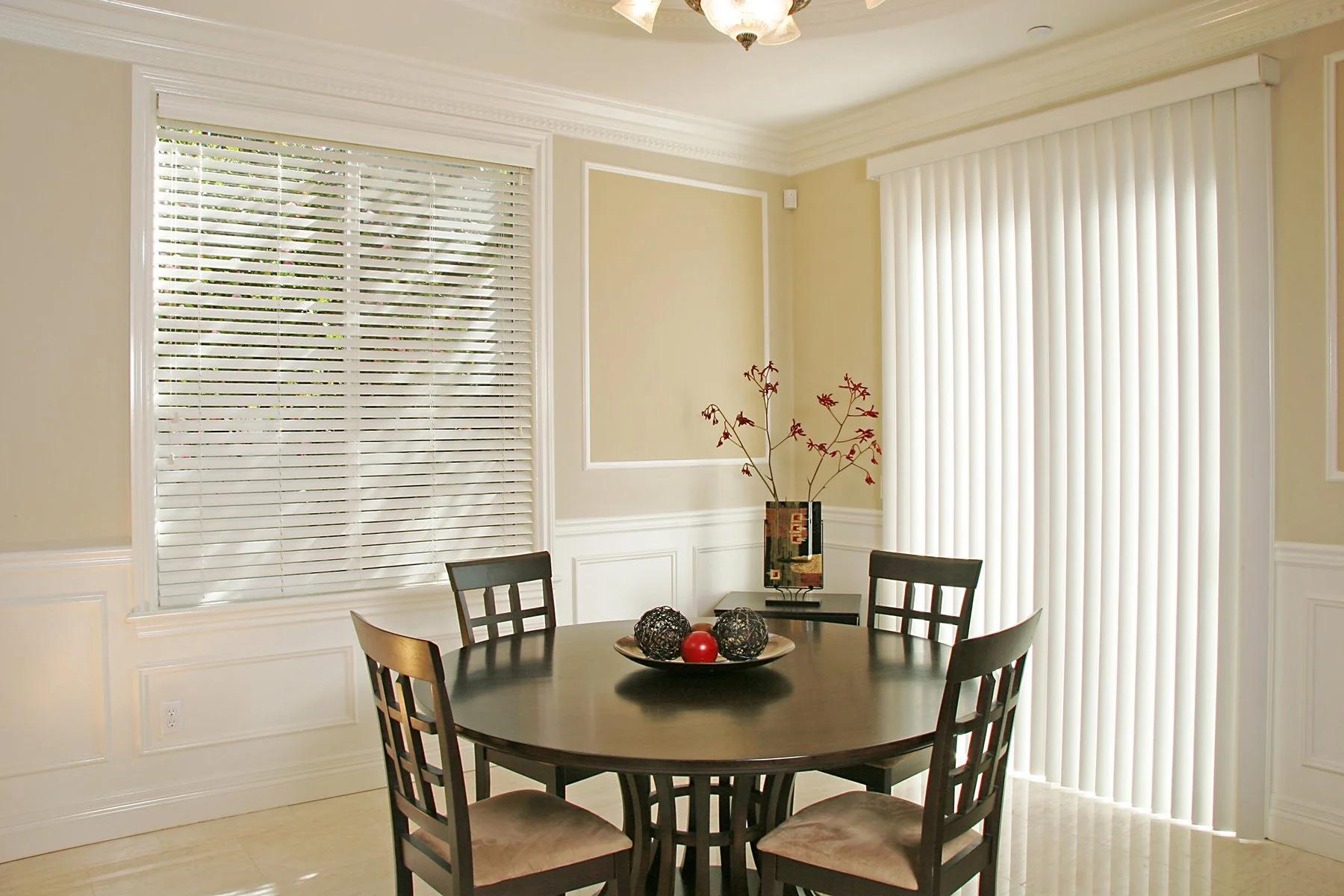
Slats stack from top to bottom and tilt open or closed, which gives you control over light and privacy. Faux wood horizontal blinds are a popular choice in South Florida because they resist humidity and warping, unlike real wood. They’re also easy to clean with a dust cloth or vacuum brush attachment. Horizontal blinds work well on most standard windows in Fort Lauderdale homes and offices. The one exception is sliding glass doors, where the wide opening and the door's horizontal movement make vertical blinds a better fit.
Vertical Blinds
Best for: sliding glass doors, wide windows, conference rooms and patios.
Slats for vertical blinds hang from top to bottom and draw sideways along a track. To open the door, you pull the blinds to one side, stacking the slats neatly together. To close them, you draw the slats across the opening. The individual slats also rotate to control light and privacy, similar to horizontal blinds. Vertical blinds work especially well for wide windows where horizontal blinds would be too heavy or sag in the center. Custom vertical blinds are made to your exact track width, so the slats hang straight and do not tangle or leave light gaps like store-bought versions. You can choose from fabric slats for a softer look or rigid PVC slats for moisture resistance near pools. Many Fort Lauderdale condos and waterfront homes use vertical blinds on their balcony doors for easy access and durability against humidity.
Quick guideline: If the window is wider than it is tall or slides open, vertical blinds are often a better fit. For standard crank or single-hung windows, horizontal blinds are typical.
How Window Blinds Improve Energy Efficiency in South Florida
Air conditioning is a major expense in this climate. The right blinds can reduce how hard your AC has to work, helping you lower energy bills. Here is how different types of blinds achieve that.

Cellular Shades
Also called honeycomb shades, this design features a series of fabric cells stacked together, each trapping a pocket of air. Air is a natural insulator, so cellular shades create a barrier that slows heat transfer, which keeps you cooler in summer and warmer in winter. The more cells (single, double, triple), the higher the insulation value. For west-facing rooms that are extremely hot in the afternoon, cellular shades are often the most effective option.
Reflective Roller Shades
These shades use a reflective coating, often white or metallic, on the side facing the window to bounce sunlight back toward the glass. Some of that heat still enters, but significantly less than with a standard dark or uncoated shade. Reflective roller shades work best on east and west-facing windows where direct sun is intense at certain times of day. They are a simpler, lower-profile alternative to cellular shades.
Motorized Scheduling
A motorized blind does not save energy on its own. What saves energy is programming it to close during peak sun hours. In Fort Lauderdale, that is about 2 p.m. to 5 p.m. when the sun is high and scorching. If you are at work or out running errands, you are not there to adjust blinds manually. A motorized system with a timer or app does it for you. That keeps heat out while you are away, so your AC does not have to work overtime when you return home.
A Tight Fit Minimizes Air Leakage
Even the most energy-efficient window blind loses effectiveness when gaps occur at the sides or the top, allowing warm air to seep in. Custom fit matters here because a blind that matches your window exactly seals off those gaps more efficiently than a store-bought option that is close but not a perfect fit.
How Much Savings to Expect
As effective as blinds can be, they won’t replace good insulation or double-pane glass. However, combining cellular shades on west-facing windows with reflective roller shades on east-facing windows can make a noticeable difference in your comfort and monthly cooling costs. The exact savings depend on your windows, orientation, and how you use your AC.
Who Benefits Most from Professional Installation?
Commercial Offices
Afternoon glare is a common problem in Fort Lauderdale offices, especially those with west- or south-facing windows. When the sun drops to a certain angle, it can wash out computer screens and make it difficult to see conference room presentations. While closing standard blinds completely solves the glare issue, it also kills the natural light. Custom blinds offer more options. Horizontal blinds with adjustable slats let you tilt the louvers to block direct sun while still bouncing soft, diffused light off the ceiling and deeper into the room. Vertical blinds work well for larger windows or floor-to-ceiling glass, as they can be drawn partially open or closed depending on the time of day. The goal is to have consistent, comfortable lighting with little adjustment needed, no matter the time of day.
Condo Associations
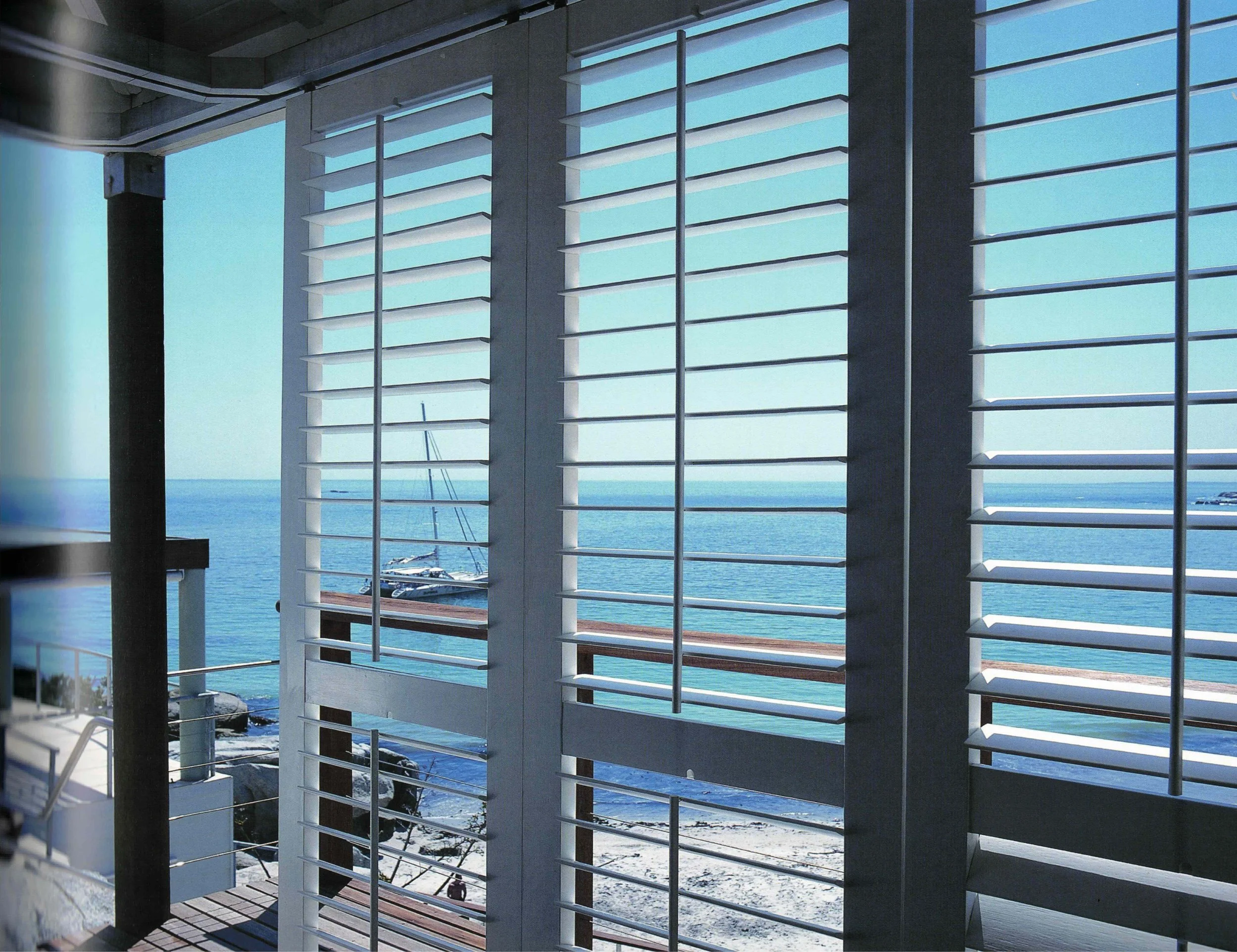
Many condo associations in South Florida have strict rules on what’s visible from the street—including uniform or selected colors or prohibiting reflective materials. Custom blinds can be made to match those exterior requirements while allowing you to choose different fabrics, colors, and styles for the interior side. You won’t get those specific options with pre-fab blinds.
Waterfront Homes
Over time, salt air will corrode standard brackets, screws, and lift mechanisms. Professional installers who work regularly in coastal Fort Lauderdale neighborhoods know which products are durable. They can recommend marine-grade stainless steel or aluminum brackets, along with corrosion-resistant screws commonly used in boat hardware. Some installers also apply anti-seize lubricant to moving parts during installation. These small upgrades may cost a bit more, but can extend the life of your blinds by years compared to standard hardware from a big box store.
New Homeowners
A resale home often comes with mismatched, damaged, or poorly-fitted blinds, or with no window coverings at all. Replacing everything at once with custom blinds solves all these problems and allows your style to shine through. Custom sizing eliminates light gaps and ensures proper operation on every window. Professional installers will fill the holes left by old hardware and leave clean, consistent results.
Why Local Installation Matters
Online retailers sell blinds that you can either DIY or have a handyman install. If you measure incorrectly, you may be stuck with return shipping costs and have to start the process all over. A local installer will typically measure each window with precision tools, bring material samples to your home or office, complete the installation efficiently, and provide a warranty with a local point of contact. In Fort Lauderdale, where many buildings have non‑standard window depths (especially in condos built in the 1970s and 1980s), an experienced installer helps avoid costly measurement errors.
Ready to stop fighting light gaps and high AC bills? We measure, supply, and install custom window blinds for homes and offices in Fort Lauderdale. You can book your free consultation or walk into our showroom in Lakeview Plaza, just south of West McNab Road, on NW 31st Avenue. (Near Fort Lauderdale Executive Airport and Calvary Chapel). Come and experience the difference for yourself!
